
|
|
Product Details:
|
| TiO₂ Purity: | ≥94% | Rutile Conversion: | ≥98.5% |
|---|---|---|---|
| Tinting Strength: | ≥112% | Particle Diameter: | 0.22-0.28 μm |
| Oil Absorption: | ≤22 G/100g | PH Range: | 6.5-8.5 |
| Highlight: | Inorganic Si/Al Surface Coating Rutile Titanium Dioxide,Organic Surface Treatment TiO₂,Universal-Level Product Titanium Dioxide Pigment |
||
BR-767 Rutile Titanium Dioxide – Technical Product Report
1. Executive Summary
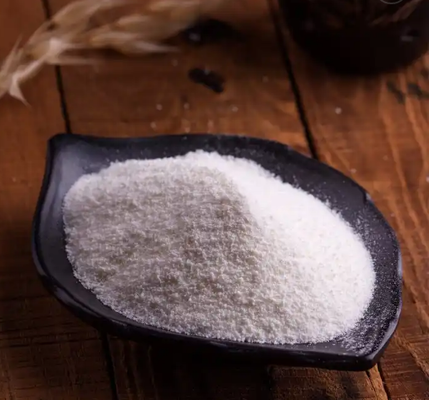
BR-767 is presented in the supplied technical data sheet as a rutile titanium dioxide pigment with inorganic Si/Al surface coating and organic surface treatment. The source describes good whiteness, good optical properties, hiding power and durability.
The stated specification includes TiO₂ purity ≥94%, rutile crystal conversion ≥98.5%, tinting strength ≥112% versus the standard sample, and average particle diameter of 0.22–0.28 μm. The source positions BR-767 as a universal-level product for plastics, coatings, rubber, masterbatch and paper making.
This report reorganizes and expands the supplied information for customer-facing technical use. Interpretive comments are technical guidance based on the supplied TDS and are not additional certified specifications.
2. Product Overview
|
Item |
Description |
|
Product |
BR-767 |
|
Pigment type |
Rutile Titanium Dioxide (TiO₂) |
|
Surface treatment |
Inorganic Si, Al surface coating; organic surface treatment |
|
Positioning |
Universal level |
|
Key stated characteristics |
Good whiteness, optical properties, hiding power and durability |
|
Applications |
Plastics, coatings, rubber, masterbatch and paper making |
|
Companies listed |
Qingdao Botian Chemical Co., Ltd.; Qingdao Tida International Trade Co., Ltd. |
3. Technical Data
|
Parameter |
Specification |
Technical Interpretation |
|
TiO₂ purity |
≥94% |
Stated titanium dioxide content. |
|
Matter volatile at 105°C |
≤0.8% |
Controls volatile/moisture-related matter. |
|
Hydrotrope |
≤0.5% |
Low stated hydrotrope level. |
|
Residue on 45 μm sieve |
≤0.05% |
Limits coarse particles. |
|
Color |
Not lower than standard sample |
Color evaluated against the standard reference. |
|
Tinting strength |
≥112% |
Comparative pigment strength versus standard. |
|
pH |
6.5–8.5 |
Near-neutral to mildly alkaline range. |
|
Oil absorption |
≤22 g/100g |
Reference for binder demand and viscosity. |
|
Resistivity of aqueous extract |
≥50 Ω·m |
Electrical resistivity characteristic. |
|
Volatile matter after 24 h |
≤1% |
Additional conditioned volatile-matter requirement. |
|
Rutile crystal conversion |
≥98.5% |
High stated rutile conversion. |
|
Average particle diameter |
0.22–0.28 μm |
Fine particle-size range. |
|
Organic matter |
YES |
Organic surface treatment/organic matter present. |
Source note: Values are reproduced or reorganized from the supplied BR-767 TDS and should be confirmed against the current supplier COA and agreed test methods for contractual use.
4. Technical Performance Interpretation
Rutile phase: The stated rutile crystal conversion of ≥98.5% indicates a highly rutile material and supports the product's optical-performance positioning.
Whiteness and hiding power: The source specifically states good whiteness, optical properties and hiding power. Final opacity and appearance depend on formulation and dispersion.
Tinting strength: Tinting strength ≥112% is reported relative to the standard sample. Actual dosage should be established in the customer's formulation.
Particle size: The stated average particle diameter of 0.22–0.28 μm is relevant to scattering, dispersion and surface appearance.
Surface treatment: Inorganic Si/Al coating and organic surface treatment are stated. These treatments are relevant to dispersion and compatibility with organic formulations.
Durability: Good durability is expressly stated in the source. Specific weathering data are not provided in the supplied TDS and should be verified for the intended end use.
Oil absorption and pH: Oil absorption ≤22 g/100g and pH 6.5–8.5 provide useful formulation references for binder demand, viscosity and compatibility.
5. Application Areas
|
Application |
Typical Context |
Relevant Characteristics |
|
Plastics |
White/light-color plastic compounds |
Optical performance, hiding power, dispersion and particle size. |
|
Coatings |
White/light-color coatings |
Whiteness, hiding power, optical performance and durability. |
|
Rubber |
White/light-color rubber compounds |
Pigment strength, dispersion and appearance. |
|
Masterbatch |
Concentrated pigment systems |
Tinting strength, particle size and processability. |
|
Paper making |
Pigmented/functional paper applications |
Whiteness and optical properties; application testing required. |
6. Formulation & Processing Considerations
Use suitable mixing/shear and a compatible dispersing system where required.
Evaluate polymer/binder compatibility, processing temperature, residence time and pigment loading.
For coatings, assess hiding power, gloss, color, viscosity and film appearance in the target binder.
For rubber, evaluate dispersion, compound viscosity, color, curing behavior and final properties.
For masterbatch, establish optimum pigment concentration, carrier compatibility, melt behavior and dispersion.
For paper making, validate optical performance, retention and interaction with the papermaking system.
7. Quality Control & Incoming Inspection
|
Inspection |
Purpose |
Recommended Verification |
|
Appearance/color |
Lot consistency |
Compare with approved standard sample. |
|
TiO₂ purity |
Pigment content |
Supplier COA / agreed laboratory method. |
|
Tinting strength |
Relative pigment strength |
Standardized comparison with reference. |
|
Rutile conversion |
Crystal-phase consistency |
Supplier report / agreed analytical method. |
|
Particle size |
Dispersion-related consistency |
Particle-size measurement. |
|
45 μm residue |
Coarse-particle control |
Sieve/residue test. |
|
Oil absorption |
Formulation demand |
Laboratory oil absorption test. |
|
pH |
Compatibility |
Aqueous suspension measurement. |
8. Product Positioning & Standards
The supplied TDS describes BR-767 as a universal-level product. No ISO or ASTM classification is stated in the supplied technical information, so this report does not assign an external classification.
|
Item |
Source-Stated Information |
|
Grade positioning |
Universal level |
|
Rutile crystal conversion |
≥98.5% |
|
Average particle diameter |
0.22–0.28 μm |
9. Packaging
|
Package |
Stated Option |
|
Standard |
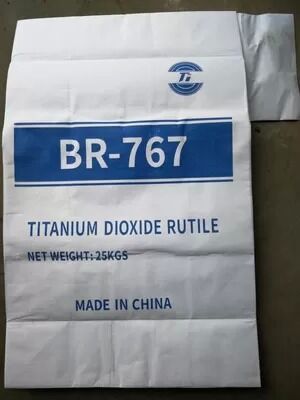
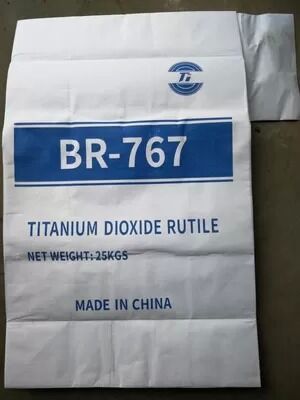
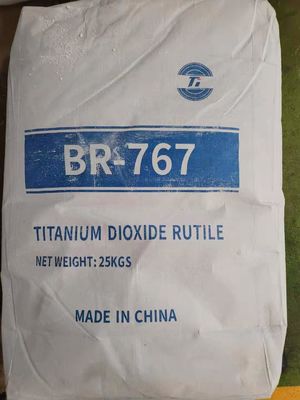
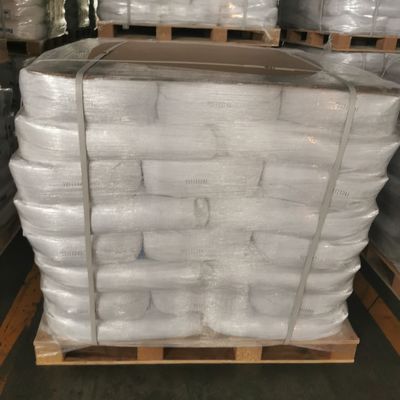
25 kg compound paper bags |
|
Bulk |
500 kg and 1,000 kg plastic woven bags |
10. Storage, Handling & Safety
Store in a dry, clean and well-ventilated area and minimize dust generation during handling. Follow the applicable Safety Data Sheet (SDS), workplace exposure controls and local regulations. The supplied TDS does not contain detailed safety instructions, so the official SDS should be consulted.
11. Commercial & Technical Evaluation Summary
|
Dimension |
Assessment |
|
Product type |
Rutile TiO₂ with inorganic Si/Al coating and organic treatment. |
|
Optical performance |
Source states good whiteness, optical properties and hiding power. |
|
Durability |
Good durability is stated by the source. |
|
Rutile phase |
Rutile crystal conversion ≥98.5%. |
|
Particle size |
Average particle diameter 0.22–0.28 μm. |
|
Application scope |
Plastics, coatings, rubber, masterbatch and paper making. |
|
Approval recommendation |
Validate through application trials and lot-specific testing. |
12. Conclusion
Based on the supplied BR-767 TDS, the product is positioned as a universal-grade rutile titanium dioxide pigment with inorganic Si/Al surface coating and organic surface treatment. Its stated combination of good whiteness, optical properties, hiding power and durability supports evaluation across a broad range of industrial applications.
The stated rutile conversion ≥98.5%, particle diameter 0.22–0.28 μm and tinting strength ≥112% provide useful indicators for white and light-color formulations. Before commercial approval, a side-by-side trial against the incumbent TiO₂ grade is recommended, focusing on color strength, whiteness, hiding power, dispersion, gloss, processing behavior and final product performance.
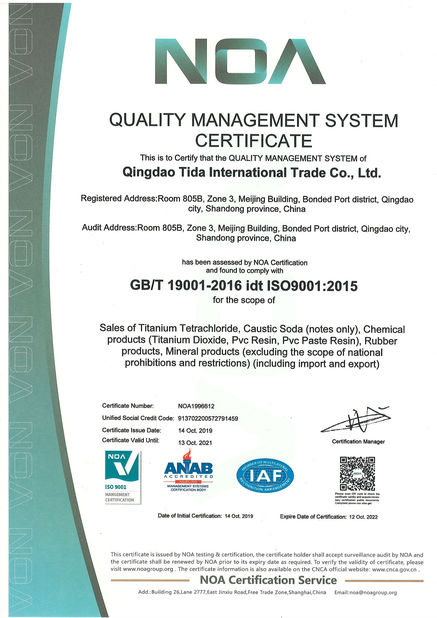
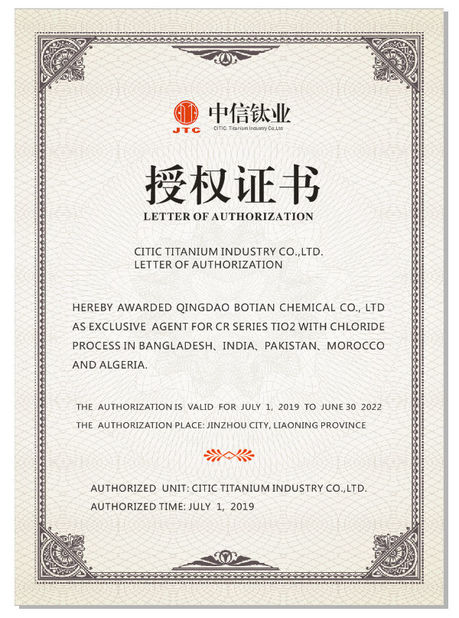
Qingdao Botian Chemical Co., Ltd belongs to Qingdao Tida International Trade Co., Ltd, founded in 2003. After eighteen years of technological and scientific innovation and production line management, we have became the leading company of Titanium Dioxide products, PVC Paste Resin products production and international sales company.
Main products include over a dozen kinds of high-precision chemical products which are chloride process and sulphate process Titanium Dioxide, Titanium Oxychloride, Titanium Tetrachloride, High Titanium Slag, PVC Paste Resin, Caustic Soda etc. With a professional, tight, young technology R&D team, making the product has a high precision and purity of scientific evidence and quality guarantee.
In the next years, Botian & Tida will continue moving steadily and firmly. Maintenance with the domestic large state-owned enterprises and Southeast Asia, North America and European countries the business relationship. At the same time we sincerely welcome and look forward to your arrival — TIDA's new partner.
Respected science, the benefit of mankind, cooperation and innovation, sustainable win-win.

Contact Person: Louis Liu
Tel: 13675620692
Fax: 86-532-89088579


 English